Today the first Bioclipse development version (versioned 2.1.0.v20090807) was released. A development update site (http://update2-devel.bioclipse.net) is packed with features to test (for example the new Bioinformatics feature, early versions of the StructureDB, QSAR, and RDF features). Note that the development versions are not compatible with the stable 2.0.x release branch which is available from Sourceforge.
There will be frequent updates to the update site for this, towards the next stable version 2.2.0. For more information and downloads of this development release, see http://pele.farmbio.uu.se/bioclipse-devel/.
2009-08-07
2009-07-09
Bioclipse 2.0 released

On behalf of all Bioclipse developers I am happy to announce the release of Bioclipse 2.0. Bioclipse is a free, open source workbench for the life sciences that provides advanced functionality mainly in cheminformatics (bioinformatics is planned for version 2.1 later this summer). Some major components include a brand new chemical editor for SWT (JChemPaint), interactive 3D visualization of molecules (Jmol), a Molecules Table capable of reading large files, and a powerful backbone in cheminformatics provided by the Chemistry Development Kit (CDK) library.
 Figure 1: Screenshot of Bioclipse showing editing of a chemical structure using the new JChemPaint editor.
 Bioclipse is a Rich Client for the life sciences that provides the means to run and integrate algorithms and tools in disconnected state, while still taking advantage of remote services if a network connection is available. Built on the famous Eclipse framework, Bioclipse delivers a state-of-the-art plugin architecture which makes it possible to extend it in any direction.
 Figure 2: Screenshot of the interactive 3D visualization of a protein using the integrated component Jmol.
 All functionality in Bioclipse 2 is available from the GUI as well as a new scripting language based on Javascript. This allows for complete control of the workbench and functionality from scripts, which can be used to automate tasks or reproduce and validate scientific analyses.
 Figure 3: All functionality in Bioclipse is available from an integrated scripting language based on Javascript.
 Bioclipse 2 can be downloaded from Sourceforge, releases are available for all major platforms. There is an update site where users can install additional functionality (such as Speclipse) and data collections; this is available from the Bioclipse workbench under menu Help > Software updates.
A small installation guide is also provided, but the main documentation for Bioclipse is available from help.bioclipse.net; the same information is also available from within Bioclipse from the menu Help > Help Contents. For general questions there is the bioclipse-users mailing list.
All software contains bugs, and Bioclipse is no exception. However, in contrast to many commercial and closed source initiatives, open source projects generally have a faster bug fixing rate as well as more frequent releases. If you find bugs in Bioclipse, please report them on bugs.bioclipse.net. There is a list of intractable bugs on the Bioclipse development wiki, and also a convenience list for tracking known major bugs.
Bioclipse is an open development that welcome new developers with varying backgrounds. Developers hang out on daily basis on IRC (irc.freenode.net, channel #bioclipse), and can also be reached via the mailing list bioclipse-devel.
Thanks to all contributors who made this release possible!
2009-07-03
Working with large SDFiles in Bioclipse
I decided to test the performance of Bioclipse 2 (current release 2.0.0RC5) for working with large structural files (SDFiles). I first loaded in the complete ChEBI (Chemical Entities of Biological Interest) which consisted of 13.486 chemical structures and has a file size of 54 MB on disk. This was very fast, Bioclipse indexed and opened the file in less than 4 seconds, and then continued to parse the properties in the background for another 4 seconds (but during this time it is possible to browse and work with the structures). The MolTable editor was very responsive and scrolls nicely.
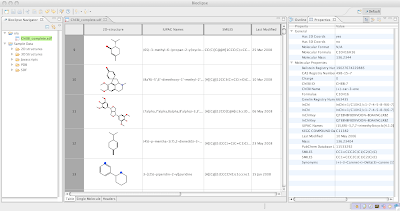
Figure 1: Screenshot from Bioclipse with the entire Chebi SDF open.
To really push Bioclipse, a test file of the first 225.000 compounds in Pubchem were concatenated, resulting in an SDFile of size 1.1 Gb. Bioclipse creates an index of the file and opens it in 66 seconds. It then continues parsing the properties in the background, which takes another 78 seconds. The MolTable editor was still very responsive and scrolls nicely. Not bad for such a large file!
Calculating InChI on the >1Gb file on the open file in MoleculesTable (resulting in all InChI properties kept in memory) took 13.20 min. Trying to save the resulting file took 2 min 49 seconds for the first 20Mb, extrapolated to 2h and 20 minutes for the total (this forces a complete save of all chemical structures and a lot of swapping in and out from disc). Calculating the same InChi and saving to file but not opening it in MolTable first (avoiding keeping all properties in memory) took 20 minutes. What do we learn from this? Browse large files is fine, but if you want to manipulate them then, do this on the file directly without visual inspection.
As a side note: Handling large SDFiles is generally not a recommended solution. When StructureDB (a relational database for chemistry) is released for Bioclipse, we will see a dramatic performance boost when dealing with large collections of molecules.

Figure 1: Screenshot from Bioclipse with the entire Chebi SDF open.
To really push Bioclipse, a test file of the first 225.000 compounds in Pubchem were concatenated, resulting in an SDFile of size 1.1 Gb. Bioclipse creates an index of the file and opens it in 66 seconds. It then continues parsing the properties in the background, which takes another 78 seconds. The MolTable editor was still very responsive and scrolls nicely. Not bad for such a large file!
Calculating InChI on the >1Gb file on the open file in MoleculesTable (resulting in all InChI properties kept in memory) took 13.20 min. Trying to save the resulting file took 2 min 49 seconds for the first 20Mb, extrapolated to 2h and 20 minutes for the total (this forces a complete save of all chemical structures and a lot of swapping in and out from disc). Calculating the same InChi and saving to file but not opening it in MolTable first (avoiding keeping all properties in memory) took 20 minutes. What do we learn from this? Browse large files is fine, but if you want to manipulate them then, do this on the file directly without visual inspection.
As a side note: Handling large SDFiles is generally not a recommended solution. When StructureDB (a relational database for chemistry) is released for Bioclipse, we will see a dramatic performance boost when dealing with large collections of molecules.
2009-07-02
Bioclipse 2.0 Release Candidate 5

2009-06-29
Bioclipse 2.0 Release Candidate 4
Today, Bioclipse 2.0 Release Candidate 4 (versioned 2.0.0.RC4) was released. The release requires a fresh download from Sourceforge, and we kindly ask beta-testers for bug reports on the bugs.bioclipse.net.
Hopefully this will be the candidate for the 2.0 release.
2009-06-24
Bioclipse 2.0 Release Candidate 3
Today, Bioclipse 2.0 Release Candidate 3 (versioned 2.0.0.RC3) was released. The release requires a fresh download from Sourceforge, and we kindly ask beta-testers for bug reports on the bugs.bioclipse.net.
2009-06-15
Bioclipse 2.0 Release Candidate 2
Today, Bioclipse 2.0 Release Candidate 2 (versioned 2.0.0.RC2) was released. The release requires a fresh download from Sourceforge, and we kindly ask beta-testers for bug reports on the bugs.bioclipse.net.
2009-06-05
Bioclipse 2.0 Release Candidate 1
Today, Bioclipse 2.0 Release Candidate 1 (versioned 2.0.0.RC1) was released. This constitutes a big step towards the Bioclipse 2.0 release and also implies a feature freeze. The release is available from Sourceforge, and we kindly ask beta-testers for bug reports on the bugs.bioclipse.net.

Bioclipse 2.0RC1 includes the core, chemoinformatics, and balloon features as well as extended sample data, the Blue Obelisk Data Repository, and the Drugbank collection. On the main update site are the Bioclipse SDK, CDK Power tools, XWS4J, and hivpred features. The Experimental update site contains the experimental feature (with R support), the QSAR, RDF, and XML feature. See www.bioclipse.net and the Bioclipse Wiki for more information about the features.

Figure: Screenshot from Bioclipse showing the drug Reserpine with
a SMARTS hit highlighted as substructure.
a SMARTS hit highlighted as substructure.
Bioclipse 2.0RC1 includes the core, chemoinformatics, and balloon features as well as extended sample data, the Blue Obelisk Data Repository, and the Drugbank collection. On the main update site are the Bioclipse SDK, CDK Power tools, XWS4J, and hivpred features. The Experimental update site contains the experimental feature (with R support), the QSAR, RDF, and XML feature. See www.bioclipse.net and the Bioclipse Wiki for more information about the features.
2009-05-21
Bioclipse 2.0-beta5 released
Due to a major update in the Bioclipse managers, Bioclipse2.0 beta5 was released today (versioned 2.0.0.B20090520). Grab your download from Sourceforge (unfortunately this release cannot be updated from the update site). This IS the last beta release before Release Candidate 1, and contains numerous bug fixes to JCP, SDFEditor. Please report any bugs to http://bugs.bioclipse.net.
2009-04-09
Bioclipse 2.0-beta4 released
Today, Bioclipse2.0 beta4 was released (versioned 2.0.0.B20090409). Grab your download from Sourceforge (unfortunately this release cannot be updated from the update site). This is (hopefully) the last beta release before Release Candidate 1, and contains numerous bug fixes, Balloon for 3D conformer generation, and a SmartsView for testing out SMARTS on your chemical structure. Please report any bugs to http://bugs.bioclipse.net.
 Screenshot: Bioclipse 2.0beta4 with all Features installed from update site. From left to right: Eclipse RCP, XWS4J, CDK Extras, Sample Data, Blue Obelisk Data Collection, Balloon, QSAR, HIVPred, and Chemoinformatics.
To learn more about the features and projects in Bioclipse, see the Bioclipse Wiki.
 Screenshot: Bioclipse 2.0beta4 with all Features installed from update site. From left to right: Eclipse RCP, XWS4J, CDK Extras, Sample Data, Blue Obelisk Data Collection, Balloon, QSAR, HIVPred, and Chemoinformatics.
To learn more about the features and projects in Bioclipse, see the Bioclipse Wiki.
2009-02-28
Bioclipse 2.0-beta3 released
Today, Bioclipse2.0 beta3 was released with id 2.0.0.B20090227. Grab your download from Sourceforge. The major updates in this release are many bug fixes for JChemPaint for 2D editing, and a new MoleculesTable with resizable columns and rows (see Figure 1) for working with collections of molecules.

Figure 1: Screenshot showing the new MoleculesTable with resizable columns and rows (middle), the selected molecule in the 2DView (top right) and molecular properties of the selected molecule (bottom right).
Also added is a new update site for experimental features, including an early version of the Bioclipse QSAR package (see Figure 2). Experimental site will be used extensively in the future to give users the ability to test new features that are in development.
 Figure 2: Screenshot showing the experimental QSAR editor (bottom), the Matrix editor (top) and a Plot (bottom left) of two descriptors against each other.
Please note that you need to download a fresh version from Sourceforge, it is not possible to upgrade from Software Updates inside Bioclipse.
Links:

Figure 1: Screenshot showing the new MoleculesTable with resizable columns and rows (middle), the selected molecule in the 2DView (top right) and molecular properties of the selected molecule (bottom right).
Also added is a new update site for experimental features, including an early version of the Bioclipse QSAR package (see Figure 2). Experimental site will be used extensively in the future to give users the ability to test new features that are in development.
 Figure 2: Screenshot showing the experimental QSAR editor (bottom), the Matrix editor (top) and a Plot (bottom left) of two descriptors against each other.
Please note that you need to download a fresh version from Sourceforge, it is not possible to upgrade from Software Updates inside Bioclipse.
Links:
2009-02-13
Bioclipse 2.0-beta2 released
Today, Bioclipse2.0 beta2 was released. The status was unfortunately not good enough so that a release candidate could be made available this week. Anyway, the beta2 version is packed with new features, like a completely new Welcome page, SMILES files support, and numerous updates to JChemPaint for 2D editing.
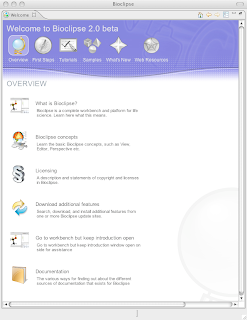 Figure: A topic in the new Welcome page of Bioclipse
Existing users cannot upgrade to Bioclipse 2.0beta2 via online updates; the version requires a fresh download from Sourceforge.

Links:
 Figure: A topic in the new Welcome page of Bioclipse
Existing users cannot upgrade to Bioclipse 2.0beta2 via online updates; the version requires a fresh download from Sourceforge.

Figure: A drug visualized in 3D using the isoSurface command in Jmol.
Links:

2009-01-23
Bioclipse 2.0beta released
Today, the beta version of Bioclipse (versioned 2.0.0B20090123) was released. This release features, among others, the new JChemPaint, a new SDFEditor capable of parsing large files (tested >1Gb), a rewritten welcome page, a new console for command line access, a new Javascript editor to run scripts, etc. It also features (via online updates) optional installation of the XMPP plugin for accessing web services based on XMPP, etc.

Existing users cannot upgrade to Bioclipse 2.0beta via online updates; the version requires a fresh download from Sourceforge and read the installation guide.

More information: See the Bioclipse website and the Bioclipse development wiki.

Existing users cannot upgrade to Bioclipse 2.0beta via online updates; the version requires a fresh download from Sourceforge and read the installation guide.

More information: See the Bioclipse website and the Bioclipse development wiki.
2008-10-29
Bioclipse 2.0.0A20081028 released
Today, Bioclipse 2.0.0A20081028 was released. For existing users: Bioclipse should pick this up and ask for upgrade automatically, but you can always choose menu "Search for extensions..." to manually start the upgrade.
The upgrade brings numerous bug fixes to Bioclipse, but the new JChemPaint and CDK1.2 rendering are not included yet. Bioclipse 2.0.0 is preliminary scheduled for release in mid December, and will contain a new 2D-editor for chemical structures (JChemPaint 3), a new MoleculesTable (for editing large lists of molecules like SDFiles, database queries etc), a new Jmol feature with stable Jmol interaction, search/retrieval/editing/upload of various spectra, and a plugin for local chemical databases (StructureDB). More features (QSAR, Pharmacophores etc) will be available in early 2009.
Get Bioclipse 2.0.0 alpha02 at Sourceforge and read the installation guide.
The Bioclipse Team
The upgrade brings numerous bug fixes to Bioclipse, but the new JChemPaint and CDK1.2 rendering are not included yet. Bioclipse 2.0.0 is preliminary scheduled for release in mid December, and will contain a new 2D-editor for chemical structures (JChemPaint 3), a new MoleculesTable (for editing large lists of molecules like SDFiles, database queries etc), a new Jmol feature with stable Jmol interaction, search/retrieval/editing/upload of various spectra, and a plugin for local chemical databases (StructureDB). More features (QSAR, Pharmacophores etc) will be available in early 2009.
Get Bioclipse 2.0.0 alpha02 at Sourceforge and read the installation guide.
The Bioclipse Team
2008-08-08
Bioclipse 2.0-alpha02 released
To fix some things in the core Bioclipse plugins of Bioclipse, the 2.0.0.alpha02 version was released today (new versioning: 2.0.0.A20080808 where A stands for alpha). You are not able to upgrade to this version from the update site, and any new updates from that site will not work in alpha01 version. This is an inconvenience that we hope not will be repeated, but was necessary at this point.
Get Bioclipse 2.0.0 alpha02 at Sourceforge and read the installation guide.
Get Bioclipse 2.0.0 alpha02 at Sourceforge and read the installation guide.
2008-08-01
Bioclipse 2.0-alpha01 released
The Bioclipse Team is proud to present the first alpha release of Bioclipse2. Note that this is a release targeted towards developers. We are extremely happy for all sorts of feedback, please read here about how to submit bug reports or feature requests.

Fig: Screenshot of SDFile editing in Bioclipse2.
Bioclipse2 is released for Windows (win32_32, win32_64), Mac OS X (x86, ppc), and Linux (x86_32, x86_64), and downloads are available from the Sourceforge download page.
 Fig: Screenshot of 2D editing in Bioclipse2.
On first startup, Bioclipse will search for updates to currently installed features but will not install extra features. To do this, simply go to the menu Help > Search for updates...
 Fig: Screenshot of 3D visualization in Bioclipse2.
Links:
/The Bioclipse Team

Fig: Screenshot of SDFile editing in Bioclipse2.
Bioclipse2 is released for Windows (win32_32, win32_64), Mac OS X (x86, ppc), and Linux (x86_32, x86_64), and downloads are available from the Sourceforge download page.
 Fig: Screenshot of 2D editing in Bioclipse2.
On first startup, Bioclipse will search for updates to currently installed features but will not install extra features. To do this, simply go to the menu Help > Search for updates...
 Fig: Screenshot of 3D visualization in Bioclipse2.
Links:
/The Bioclipse Team
2008-05-21
Threading and Javascript
 The Javascript console is slowly acquiring features that the other two consoles (ruby and groovy) don't have. The latest addition to this line of features is threading. Here's what we learned from adding threading:
- We still think threading is tricky. Basically, we kept adding
synchronizedto places until everything worked. Effective Java says that you shouldn't addsynchronizedeverywhere. - The basic problem was this: when executing long commands, the js interpreter grabbed the main thread, and things locked up.
- We solved this by replacing the js environment with a js thread, which in turn initialized the environment.
- After that change, commands were executed, but couldn't print things back to the js console.
- So, we devised a mechanism for sending the js thread a "post-command hook" along with the js command. The post-command hook is a piece of code that the js thread executes after it has executed the js command. Sending code as parameters is exciting!
- Normally, one puts such code into an anonymous
Runnablesubclass, but we couldn't do that, sinceRunnable.run()doesn't take a parameter, and we needed to send a parameter to our hook. So we invented our own class,Hook.
2008-05-07
JChemPaint with highligting in Bioclipse2
Following up on the recently added MDLEditor using JChemPaint in Bioclipse2, I created and added an Outline with selections properly highlighted in the structure in JChemPaint. Also added are basic properties available in the Properties View. They are currently read-only, but could easily be extended for editing properties of the selected entity.


2008-04-28
Editor for SDFiles in Bioclipse
Based on Egon's new StructureWidget, I constructed an Editor to browse SDFiles in Bioclipse. It uses lazy UI rendering and is shows very promising performance. Apart from reading and rendering the structure, it also reads and displays properties in a table. Indeed a very important feature-addition towards open source QSAR in Bioclipse!


2008-04-17
Jnanotube - a nanotube plugin for Bioclipse
I'm delighted to announce the addition of a new Bioclispe plugin entitled 'Jnanotube'. The plugin makes it possible to easily create nanotube structures in Bioclipse. The plugin adds a new view, 'Jnanotube' which consists of GUI components that are able to generate virtual XYZ files that easily can be displayed in the JmolView. The plugin was contributed for the Bioclipse 1.2.x branch by Joe and Sam, and I hope they will continue to support the plugin for Bioclipse2 as well, and are looking forward to other additions from them (they have hinted that they are building a peptide-builder plugin). So far the plugin is not part of a Bioclipse release, but we will include it in the next 1.2.x release.


Subscribe to:
Posts (Atom)

 Posts
Posts

